Framing the Future
Transforming the PDP into a guided lens decision journey
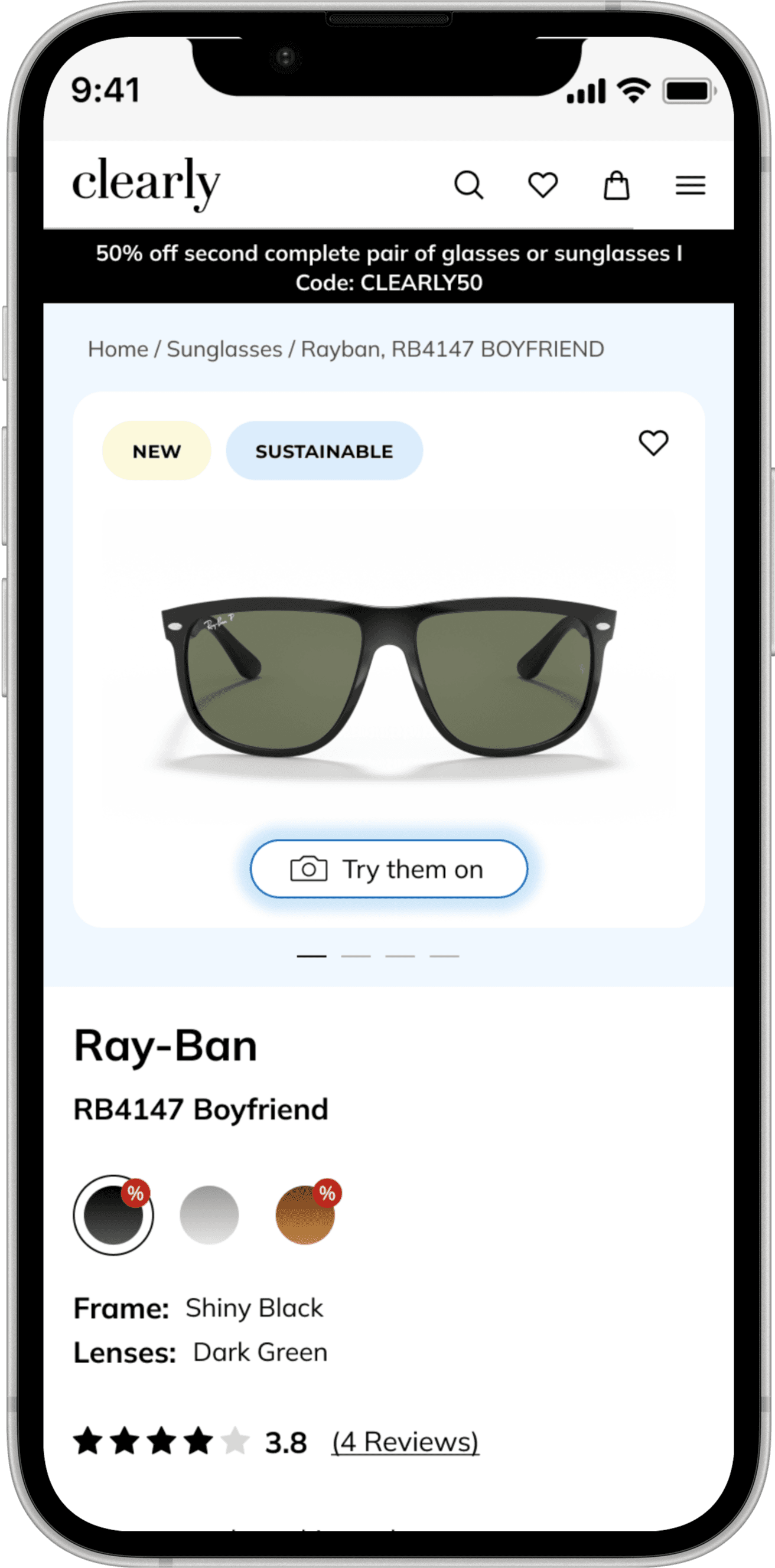
Clearly is an iconic brand with a deeply loyal following, especially among fishing and on-the-water enthusiasts. Customers trust the brand implicitly, often for generations. However, user research uncovered a critical disconnect between their best-in-class lens technology and the e-commerce experience.
Customers were loyal to the brand, but their choices were based on instinct, not insight.
Despite relying on Clearly for performance, their online purchasing behavior was driven by aesthetics. The data was eye-opening:
80% of users chose their lens color based on personal taste or prior knowledge, reporting that the site offered no guidance on what lens was best for their needs.
While polarization was a key selling point, only 65% of users could tell if the lenses they were viewing were polarized.
This meant customers were often buying the wrong tool for the job, leading to a subpar experience and representing a massive loss of revenue and brand equity for the business.
As the sole User Experience Designer for Clearly within EssilorLuxottica, I owned the design process end-to-end. I partnered with research, business, and IT stakeholders to frame the problem, define a data-driven strategy, and deliver a solution that was desirable for users, technically feasible, and valuable for the business.
Proving the value: Turning skepticism into buy-in
The business team was initially hesitant about a "lens-first" selection flow, fearing it would add friction and hurt conversion. Rather than debating opinions, I let the data speak for itself. I designed two variants—a classic picker versus a "Double Selector" for lens and frame—and we ran a focused A/B test.
The results were clear and decisive. The Double Selector variant delivered:
+3% conversion rate
+3% revenue
Adapting on the fly: Solving an engineering blocker
Mid-project, the engineering team flagged a significant risk: our proposed design would trigger too many backend API calls, threatening to slow down the page and harm site performance.
Performance is non-negotiable. I immediately partnered with the developers to understand the bottleneck and pivoted to a simpler interaction pattern that preserved the core guidance and clarity of the user experience while removing the technical risk.
The redesigned Product Detail Page (PDP) was designed to educate users and guide them toward the right choice by creating a clear, logical path:
Key Product Features
Essential information like polarization and bio-based materials are surfaced as scannable badges, allowing users to see key features at a glance.
Contextual Guidance
The core of the solution lies in providing dynamic guidance for the specific lens selected. Benefit-oriented descriptions and badges explain the best use for each lens color in real-world conditions, translating complex technology into simple recommendations.
Layered Information
For users who want to dive deeper, a clear and accessible link to a comprehensive lens selection guide offers more detailed information on demand.
Guided Flow
This new layout gently guides the user to consider lens performance first and then frame style, creating a logical journey from function to taste.



Takeaways
This project was a powerful reminder of three core principles that drive my work:
Evidence converts resistance
When faced with stakeholder skepticism, good data is the most persuasive tool you have. The A/B test didn't just solve a design problem; it aligned the entire team and built a foundation of trust for future initiatives.
Performance is a core part of UX
A brilliant design that breaks the tech stack is a liability, not a solution. Proactively partnering with engineering to anticipate and solve constraints is essential to shipping high-quality work on time.
Guide decisions, not just choices
The best digital experiences don't just present users with options; they help them make better decisions. By focusing on user education and guidance, we created more value for the customer and, in turn, for the business.