INCREASING AVERAGE ORDER VALUE
Optimizing the checkout for an e-commerce leader
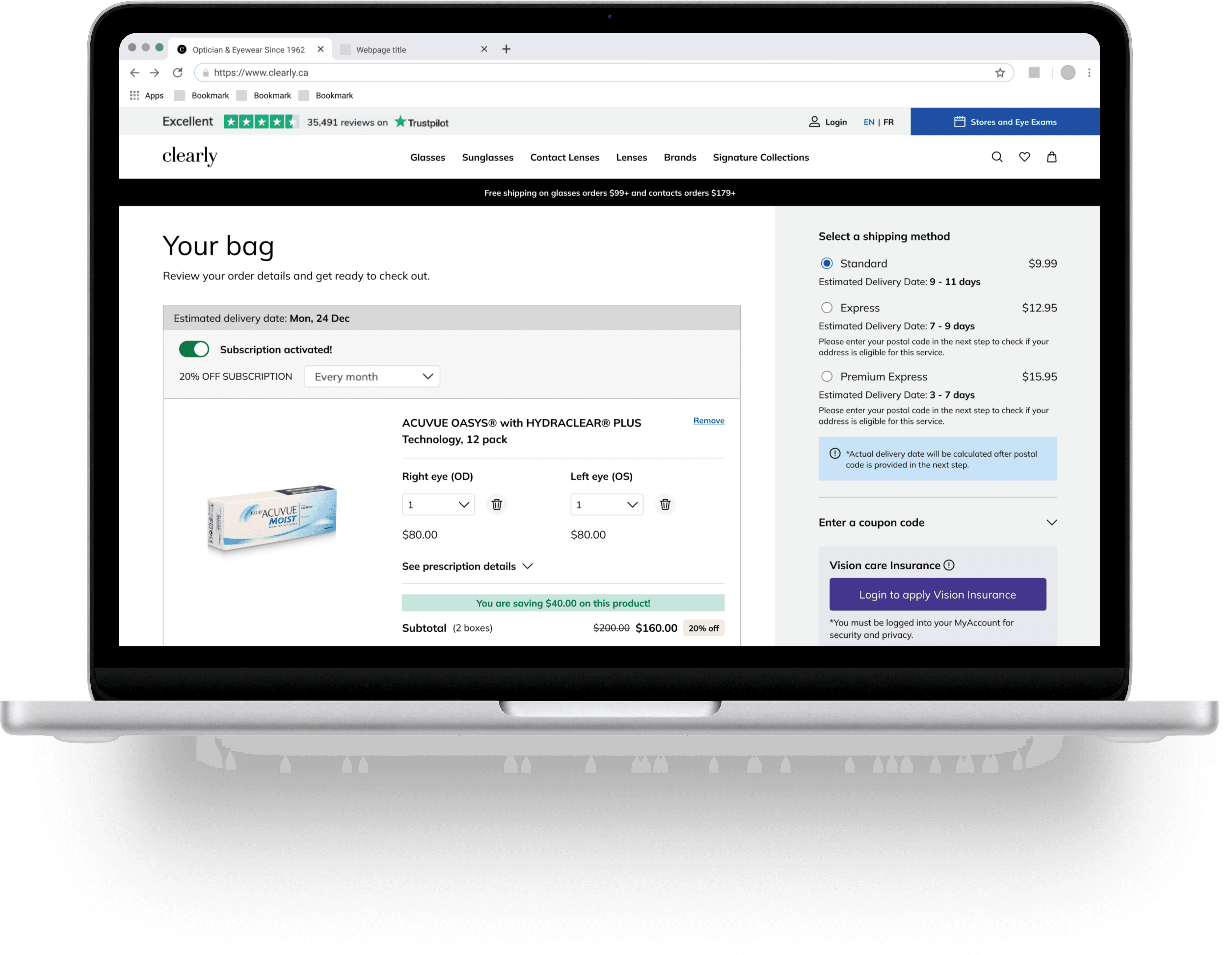
The Clearly checkout process presented multiple friction points. This was confirmed not only by an internal backlog of over 70 Jira tickets, but also by external criticism. During the project, I found an industry article that specifically highlighted Clearly's checkout as a "bad example" for its mandatory login page, which forced users to choose between logging in or continuing as a guest.
Our internal findings supported this. The data showed that over 80% of our users chose to check out as guests , and less than 2% ever registered before the checkout. This initial barrier reflected a wider industry trend, with studies showing that 27% of users abandon checkouts they find too long or complicated. The need for a redesign was clear and urgent.
As the sole User Experience Designer for Clearly within EssilorLuxottica, I owned the design process end-to-end. I partnered with research, business, and IT stakeholders to frame the problem, define a data-driven strategy, and deliver a solution that was desirable for users, technically feasible, and valuable for the business.
Our approach was a methodical analysis of all available data and expert knowledge, rather than new user research. We gathered every piece of information we could to build a comprehensive action plan.
Our inputs included:
Insights from the analytics team and winning solutions from previous A/B tests.
A thorough review of known unresolved bugs from internal and external user tests, which we prioritized from a backlog of over 70 tickets.
UX best practices from industry leaders like the Baymard Institute and the mobile-first principles advocated by Luke Wroblewski, combined with competitor benchmarks.
Based on the insights from our analysis, we identified and implemented four major enhancements to streamline the entire checkout experience:
Make the cart page a mandatory step
This ensures users have full clarity on their order, shipping costs, and promo codes before committing to payment, aligning the desktop experience with mobile.
Remove the initial login page
Since over 80% of users check out as guests, this barrier was removed to speed up the process. Users can now log in directly on the delivery page or create an account after the purchase is complete.
Integrate Google Autocomplete Address API
We reduced the number of form fields in the delivery page by allowing users to type and select their address from a list, which then autocompletes the remaining fields, saving time and reducing errors.
Change payment methods ranking position
In the payment page, we reordered the payment methods based on their actual usage data for each specific country, giving prominence to the most popular options.



Impact
The holistic optimization of the checkout delivered significant and measurable improvements across the board, validating our methodical approach.
We also received a lot of positive feedback on how simple and fast the new checkout was from several user tests we did in the following weeks.
+1.8% uplift in the overall conversion rate.
-6% drop-off at the first step of the checkout process.
-1.1% in address validation errors, which led to a notable reduction in customer service calls for post-order address corrections.
Impact
The holistic optimization of the checkout delivered significant and measurable improvements across the board, validating our methodical approach.
We also received a lot of positive feedback on how simple and fast the new checkout was from several user tests we did in the following weeks.
+1.8% uplift in the overall conversion rate.
-6% drop-off at the first step of the checkout process.
-1.1% in address validation errors, which led to a notable reduction in customer service calls for post-order address corrections.
This project was fundamental in shaping my design philosophy and process.
Teamwork is a superpower
Facing a huge amount of work in a short period, I learned that working side-by-side with a motivated team is the key to accomplishing anything. Trusting colleagues and asking for help is a strength.
Start with the data you have
You don't always need new research to make a significant impact. A deep analysis of existing data, like a technical backlog or analytics reports, can be a powerful and efficient catalyst for change.
Stand on the shoulders of giants
Applying established, expert-backed principles from industry leaders is a low-risk, high-impact way to solve common usability problems and build a foundation for evidence-based design.